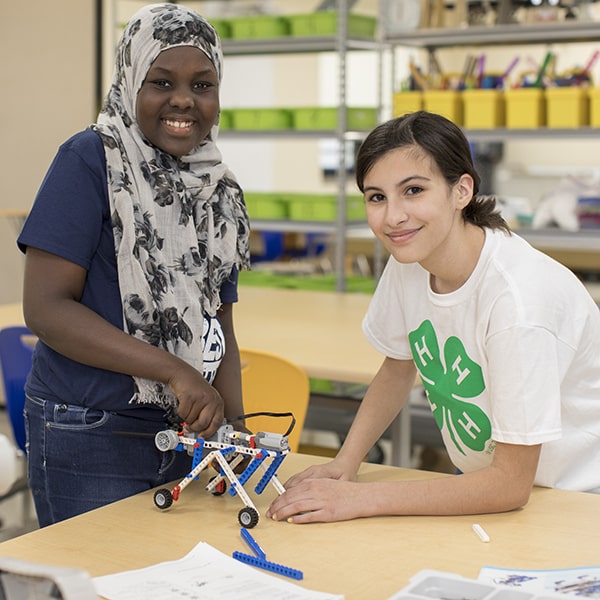
4-H Science programs create hands-on learning experiences to encourage young minds and help fill our nation’s shortage of young leaders proficient in science, engineering, and technology.
Outstanding science programs start with a strong understanding of the infrastructure needed for success. Science Competencies are the "demonstrated capacities" that are integral for facilitating high-quality learning environments with meaningful educational outcomes. All of the 4-H Science core competency tools are designed to be flexible.
Explore the logic model, checklist, competencies, and inquiry-based learning.
View All Science Building Understanding Resources
Promising Practices are examples of exemplary peer reviewed 4-H Science materials and practices from Land-grant Universities in the areas of Curriculum, Evaluation, Program Design and Development, Professional Development, Partnerships, Resource Development and Marketing.
Training activities assist educators in identifying sources and locations of potential 4-H science volunteers and to prepare, engage and retain them. These will assist educators in recruiting and developing volunteers to be more comfortable in their ability to lead 4-H Science.
View All Science Implementation Resources
Evaluation planning starts with your program design and continues all the way through reporting your results. Results from evaluations have shown that 4-H Science has a positive impact on youth interest and engagement in science related programs.
Respondents have reported having high educational aspirations and more than 80 percent indicated that they intend to finish college or pursue post-baccalaureate education.
View All Science Evaluation Resources
4-H Mall • National 4-H Youth Conference Center
© 1902-2013 4-H. All Rights Reserved. The 4-H Name and Emblem have special protections from Congress, protected by code 18 USC 707. www.4-H.org is maintained by National 4-H Council. 4-H is the youth development program of our nation's Cooperative Extension System.