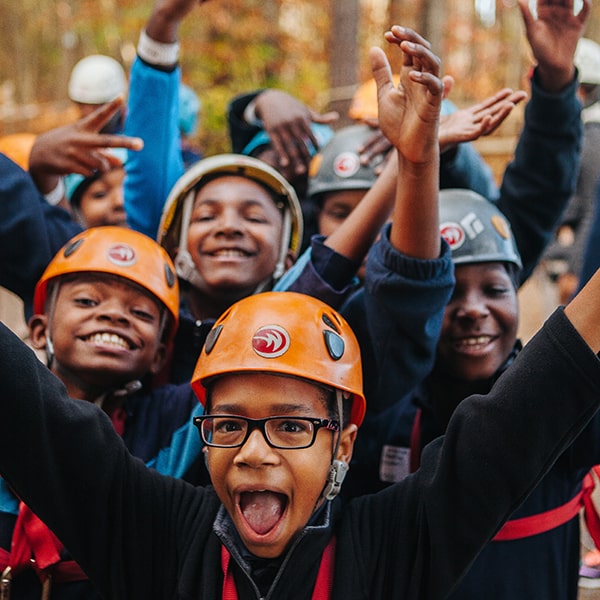


I recently had the pleasure of sharing my thoughts on the land-grant mission and how it can help strengthen its relationship with 4-H in the 21st century. In the article, published by EvoLLLution.com, I was joined by fellow leaders of youth development and higher education:

  • Gordon Gee, President of West Virginia University
  • Stephen M. Gavazzi, Professor of Human Development and Family Science at Ohio State University
  • Karen J. Pittman, President and Chief Executive Officer of The Forum for Youth Investment

The joint interview is a follow up to the 2018 book “Land-Grant Universities for the Future: Higher Education for the Public Good,” and its discussions on the impact of Cooperative Extension as well as land-grant universities’ connections with the community.

Here are a few highlights from the article:

The EvoLLLution: What are some of the challenges that universities typically face when it comes to creating accessible and relevant programming for K-12 learners?

Gordon Gee: One of the biggest problems is that universities largely have become disconnected from public education. Some of this disconnect has come about through arrogance. Here, universities are operating under the assumption that they can simply sit back and wait for the K-12 system to do its work before receiving its students for a final round of educational polish. Universities should be actively creating relationships and partnerships with public educators. In fact, they should be getting back into the business of creating laboratory schools, especially regarding the development of innovative models that unite educators from campuses and communities in the common purpose of educating our youth.

How does the mission and work of 4-H align with land-grant universities and their Cooperative Extension Services?

Stephen Gavazzi: 4-H is a program run by Cooperative Extension Services, and Extension was established through the Smith-Lever Act of 1914, the third of three major congressional actions that formed the basis for our three-part land grant mission. Land-grant institutions must transcend the urban-rural divide by focusing on what is good and right for all our nation’s communities, regardless of their geographic location. Cooperative Extension Services in general and 4-H programming more specifically must help land-grant universities achieve that objective. In 1914, undoubtedly there was a major focus on rural youth and more agriculturally based activities. In our modern era, we are witnessing some significant growth in 4-H programming that reaches youth in more urbanized locations. For that reason, 4-H now represents one of the land-grant university’s best efforts to connect the urban-rural divide.

Why is 4-H programming relevant in the 21st century?

Jennifer Sirangelo: One of the most important roles that 4-H plays today is in working alongside the nation’s public school system. As an organization founded by educators, 4-H knows schools cannot do it alone. Across the U.S., 4-H is able to support and enhance what is happening in the classroom through hands-on leadership experiences that are proven to develop their skills and ability to lead. This kind of leadership development has always been important to our country’s well-being, but we believe this work is even more relevant now. We need leaders who engage others, who have confidence in their own abilities, who think about the needs of others and are giving back to their communities. The role of 4-H is to the develop community members who are civic-minded individuals with valuable strengths and real influence to improve the world around us.

How can land-grant universities and Cooperative Extension Services better support 4-H programming in the years to come?

Karen Pittman: I would take this back to the fact that Cooperative Extension Services exists inside of land-grant universities that have made a commitment to increased diversity. And I would encourage these universities to hold themselves numerically accountable. To not only make these verbal commitments, but to begin to discuss where they are and where they are not making progress by referring to data that has been gathered about various efforts to make themselves more diverse. That would include evaluative information about activities inside of Extension efforts in general and more specifically within their 4-H programming.

Visit EvoLLLution.com to read the feel interview!


“Brand in Action” is a series of interviews with 4-H  in states nationwide who are investing in the 4-H Grows Engagement Campaign to elevate the 4-H brand, raise resources to help grow the 4-H program and positively impact more kids in the future. This month, we feature Jamila Walida Simon, New York State 4-H Citizenship and Civic Engagement Specialist, Cornell University Extension in the first Brand in Action video interview.

“Brand in Action” is a series of interviews with 4‑H leaders in states nationwide who are investing in the 4‑H Grows Engagement Campaign to elevate the 4‑H brand, raise resources to help grow the 4‑H program and positively impact more kids in the future. This month, we feature Lisa Bouillion Diaz, 4‑H director and assistant dean at the University of Illinois at Urbana-Champaign.

Describe your role as 4‑H Director and Assistant Dean at the University of Illinois at Urbana-Champaign? How long have you served in this position?

Lisa Bouillion Diaz (LBD): I have worked with Illinois 4‑H for almost 11 years. I started as a 4‑H STEM Specialist and later took leadership responsibility for our statewide 4‑H Metro Initiative. I have been in my current role as the state 4‑H Director for two years.


Why is it important to the University of Illinois to grow awareness of Cooperative Extension’s 4‑H programs in counties across the state of Illinois?

LBD: In Illinois, it is our vision that all youth in our state are prepared for success in their futures. And we know that 4‑H has the programs and youth development supports to advance that vision. As an organization with over a 100-year history, we have worked hard to build on our long-standing success while also innovating to stay relevant to the needs of today’s youth. We are everything people remember from their days in 4‑H and MORE!!! But we recognize that for many alumni – 4‑H seems frozen in time. And for those who have never participated in 4‑H, we have to work hard to build awareness about who we are and the many things we have to offer. In both cases, we have to be diligent in raising awareness about today’s 4‑H and how we are impacting issues that matter to Illinois.

alumni, brand, illinois, 4h, raise your hand, brand
Can you describe your recent efforts to align your state’s 4‑H marketing efforts with the national 4‑H Grows Engagement Campaign?

LBD: Illinois 4‑H enjoys a robust marketing strategy through our newly-designed website and active social media footprint. We have integrated the “4‑H Grows Here” tag line and messages within our print and online marketing strategies. We have also actively promoted the brand activations, including “Raise Your Hand” and complimented them with local alumni activation events such as a “tell your story” and an alumni t-shirt giveaway at the Illinois State Fair.


The University of Illinois is one of 30 universities that is making a long-term investment in the 4‑H Grows Engagement Campaign to build the brand and raise resources to help grow the 4‑H program and positively impact more kids in the future. Can you tell us more about your marketing and alumni engagement plans in the coming months?

LBD: We have recently created an Illinois Alumni Association that will receive a quarterly e-newsletter communication. With names identified through the national campaign, we hope to see this association continue to grow. We are also working to develop targeted impact stories and press releases that align with the “pillar peak activities” as outlined in the National 4‑H Brand Calendar. In April, for instance, we are organizing 4‑H service activities across the state to promote in conjunction with the 1st annual National 4‑H Day of Service.

brand, story, illinois, 4-h, extension

Are you satisfied with the progress of this 4‑H partnership and the work to date?

LBD: Our state has a dedicated 4‑H Marketing and Communications Specialist, and prior to this campaign, we had marketing strategies and materials designed specifically for our state. So many of the early tools and support offered as part of the partnership were not immediately applicable. But National 4‑H Council has made an intentional effort to meet with us, listen to our needs, and help identify targeted support that builds on what we’ve already done. In the coming months, we are excited to be working together on two target priorities: 1) an alumni identification campaign in our largest metro area, and 2) designing a statewide marketing campaign to recruit corporate volunteers and mentors.

What are you most excited about as it pertains to this new 4‑H campaign and Illinois 4‑H?

LBD: Illinois initially invested in this national campaign, not because we didn’t already have a marketing specialist, but because we believed that it would strengthen and promote the 4‑H brand. A strong 4‑H brand recognition, positive association, and awareness of today’s 4‑H are outcomes that will benefit us all. I know we all have cases in which we’re talking with an individual and get the opportunity to build awareness about 4‑H. It’s always so satisfying when someone leaves the conversation with the comment, “Wow, I didn’t realize 4‑H offered so much!” This national campaign amplifies those opportunities in a way we could never achieve individually.

“Brand in Action” is a series of interviews with 4-H leaders in states nationwide who are investing in the 4-H Grows Engagement Campaign to elevate the 4-H brand, raise resources to help grow the 4-H program and positively impact more young people. This month, we feature Brett Schomer, program and events coordinator at the Montana 4-H Center for Youth Development.

brandinaction-brettschomer

Describe your role in 4-H. How long have you served in this position?

Brett Schomer (BS): I am the program and events coordinator at the Montana 4-H Center for Youth Development which is part of Montana State University Extension. This encompasses many things, including planning of statewide events, teen leadership development, advisor to the ambassador program and marketing of the statewide 4-H program.  I have been on the Montana 4-H State staff for just over 11 years. I came to Montana from New Hampshire 4-H where I was a grant assistant on several grants and worked with the state 4-H leaders on special projects for the New Hampshire 4-H Foundation.

Why is it important to you and Montana State University to grow awareness of Cooperative Extension’s 4-H programs in counties across the state of Montana?

BS: For too long 4-H has been Montana’s best-kept secret. There are too many youth across Montana that think 4-H is NOT for them. I believe it is my job to help county staff get the word out to youth and families in their communities that 4-H is for them and “4-H has what kids need!”

Can you describe your recent efforts to align your state’s 4-H marketing efforts with the national 4-H Grows Engagement Campaign?

BS: We have been working on several things to accomplish this. To begin, we have worked extensively to spread the word internally that the messaging, marketing assets and other tools are available to state and county staff and should be used whenever possible. We have also made an effort to merge many of the 4-H Grows marketing assets and messaging with resources we know counties already use, such as rack cards, pull up banners, flyers, posters, newsletter templates and other assets. We have incorporated messaging from the Grow True Leaders campaign into our Montana 4-H talking points. Our approach has been to model the use of the 4-H campaign resources in a variety of different ways at the state level and make these available to county programs for them to do the same.

We have also worked hard to incorporate the campaign into our new website while also staying in line with the Montana State University style and communication guidelines. I think this has created a unique style.

brandinaction-montana-web

Montana State University Extension is one of 29 universities that is making a long-term investment in the 4-H Grows Engagement Campaign to build the brand and raise resources to help grow the 4-H program and positively impact more kids in the future. Can you tell us more about your marketing and alumni engagement plans in the coming months?

BS: We have adapted some of the Grow True Leaders Campaign resources to unroll a volunteer recruitment campaign that we hope will strengthen county programs in an effort to receive new 4-H members. These tools include a poster, rack card, post card, talking points, press release, PSA scripts and Facebook photo/posts.

We have plans to continue to build tools for county programs to use to increase their communities’ awareness of 4-H programming. Additionally, we have enlisted the Montana 4-H Leaders Council to assist in the “Raise Your Hand” alumni campaign.

In the future, we would like to put together “booth kits” for counties to use during the fair and camp season.

Are you satisfied with the progress of this 4-H partnership and the work to date?

BS: Yes, and I also think that local people see the value of the campaign as well. The high-quality presence that the campaign has provided 4-H fosters a lot of pride. When you see the amazing ads on television or Facebook or banner in the show ring and they are so impressive it makes me and others I have talked to feel like the campaign illustrates the impact 4-H has on those involved in the program.

What are you most excited about as it pertains to this new 4-H campaign?

BS: I am most excited at how easy it has been to adapt the resources to our needs and how useful the marketing assets have been. My hope is that National 4-H Council will continue to develop new materials to help us keep the campaign fresh and relevant.


“Brand in Action” is a series of interviews with 4‑H leaders in states nationwide who are investing in the 4‑H Grows Engagement Campaign to elevate the 4‑H brand, raise resources to help grow the 4‑H program and positively impact more kids in the future. This month, we feature Jamie Wilson, Communications Manager at Michigan State University Extension.


Describe your role as Communications Manager at Michigan State University Extension Communications. How long have you served in this position?

Jamie Wilson (JW): I’ve been in my role with MSU Extension Communications for three years. In this role, I manage the marketing and communications needs of MSU Extension’s children and youth programs – helping to tell the impact of our work, promoting events and programs, and building awareness of MSU Extension and 4‑H. As our larger youth development program, Michigan 4‑H is my primary focus, although some of my time is dedicated to our early childhood initiatives as well.

Why is it important to Michigan State University to grow awareness of Cooperative Extension’s 4‑H programs in counties across the state of Michigan?

JW: The mission of MSU Extension’s children and youth programs is to ensure that every child in Michigan has the necessary skills, knowledge, and tools to lead a healthy and productive life. These programs benefit not only the youth who participate in them, but their families, schools, communities and so much more. In fact, by preparing the state’s young people for the future, MSU Extension’s children and youth programs bring significant value to the Great Lakes State as a whole. It is because of this that growing awareness of Michigan 4‑H – our primary method of delivering these youth programs – is so important to MSU and MSU Extension.

Can you describe your recent efforts to align your state’s 4‑H marketing efforts with the national 4‑H Grows Engagement Campaign?

michigan, 4-h, extension, brand

JW: MSU Extension and Michigan 4‑H have invested whole-heartedly in the 4‑H Grows Here Campaign. We’ve taken nearly all of the resources available in the MORC and added our strong university brand to them, making them into ready-to-go tools for our program coordinators and educators across the state. From banners to flyers, yard signs to social media tools, we offer all of the MORC resources, complete with MSU Extension branding, to Michigan 4‑H staff.

In addition to “Michigan-izing” all of the MORC resources, we’ve also used the campaign to create some new tools for Michigan 4‑H staff. We designed a youth and volunteer recruitment brochure, and display panels that reflect the 4‑H Grows Here Campaign. Counties are provided free copies of these materials, helping to ensure there are no boundaries to implementing 4‑H Grows Here locally. We’ve also created customizable campaign ad, brochure, event flyer and bookmark templates for county staff. These tools allow staff to market their unique local events and programs while also providing a connection to the state and national 4‑H Grows Here theme.

Michigan State University is one of 29 universities that is making a long-term investment in the 4‑H Grows Engagement Campaign to build the brand and raise resources to help grow the 4‑H program and positively impact more kids in the future. Can you tell us more about your marketing and alumni engagement plans in the coming months?

JW: Michigan 4‑H is very focused on expanding our alumni engagement efforts over the next few months. Utilizing the alumni contacts we received from National 4‑H Council in 2016, we will be hosting our very first alumni event on January 22 and are excited to have more than 100 people scheduled to attend. Throughout 2017, we hope to continue growing our alumni database by making alumni registration a part of several statewide outreach events and utilizing county fairs as another means of reaching 4‑H alums. We plan to engage these alums through events, updates and social media interaction, helping to grow a base of 4‑H supporters who will advocate for our organization, give their time and talent as volunteers and encourage children in their families and communities to join our program.

In the coming months, we also plan to work with our county staff to determine what additional tools are necessary to help them implement the 4‑H Grows Here Campaign locally. We want to ensure we provide them with whatever tools they need to help make this campaign successful at every level of our organization.

Are you satisfied with the progress of this 4‑H partnership and the work to date?

JW: Yes, it has been great to have a plethora of ready-to-go creative tools at our disposal and a series of campaign activations that provide 4‑H’ers, alums and supporters with an opportunity to engage with 4‑H. I have also enjoyed the close working relationship with my field marketing director, who has helped to ensure we can capitalize on every available opportunity and work hand-in-hand with national efforts.

What are you most excited about as it pertains to this new 4‑H campaign?

JW: As we complete the start-up year of the 4‑H Grows Campaign, I’m excited to begin working on elements of the campaign for a second time. In the year ahead, we can take lessons learned from the launch year and enhance our efforts in 2017. This will allow us to “make the best better” as we strive to grow a strong brand for 4‑H and MSU Extension in our state.

“Brand in Action” is a series of interviews with 4‑H leaders in states nationwide who are investing in the 4‑H Grows Engagement Campaign to grow awareness and reach of 4‑H programming. This month, we feature Karissa Dishon, 4‑H Youth Development Educator at Oregon State University.

Tell us about your involvement in 4‑H youth development at Oregon State University.  How long have you served in this position?

Karissa Dishon (KD): I started with OSU extension and Oregon 4‑H in 2010 as a part-time Education Program Assistant, but I truly began my 4‑H career in 1990 as a 4th grader. My nine years as a youth in the program and over 15 years as a volunteer/educator have shaped me as a person, and created career opportunities greater than I could have imagined. I am now an Assistant Professor of Positive Youth Development, and lead the Deschutes County 4‑H program in Oregon. In addition to the county program, I assist with statewide marketing and co-branding initiatives, and am heavily involved with the horse, livestock, and communication project areas.

Why is it important to Oregon State University to grow awareness of Cooperative Extension’s 4‑H programs in counties across the state of Oregon?

KD: In many ways, Oregon 4‑H is a well-kept secret and keeping it a secret is the last thing we want to do! While every 4‑H agent and staff member in Oregon wants their program to grow, succeed and develop, we aren’t very good at telling our story. Our biggest challenge in Oregon is to get our message out into the community and past our membership boundaries. Our program’s members, volunteers, sponsors, and staff know how great Oregon 4‑H is, it’s the community members who haven’t experienced 4‑H, or only have a hearsay idea of what it is, who don’t know our story. Like many states, 4‑H’s legacy of agriculture programming is deeply rooted and entrenched in the minds of alumni, members and volunteers. Our mission to grow awareness of the 4‑H program includes celebrating where 4‑H started, but also sharing what 4‑H looks like now. The options within the 4‑H program have never been more varied than they are today, and we are poised to serve ALL of today’s youth. To engage them though, we have to share our program beyond our membership.

Can you describe your recent efforts to align Oregon 4‑H’s marketing efforts with the national 4‑H Grows Here branding initiative? Please give examples (e.g. digital, billboard, fair activations) of these marketing efforts, including the target audience(s) and strategies.

KD: Our engagement with the 4‑H Grows Engagement Campaign started last year, when we hosted the National 4‑H Council marketing team and the production team for a photo shoot. This was just the spark our program needed to bring marketing back to the table and energize efforts across the state. In addition to the 4‑H Grows campaign, Oregon 4‑H is also working with the University’s marketing department to create co-branding policies and templates. These two efforts in combination will set Oregon 4‑H up for continued success, and bring new members and donors to the table.

Our efforts have spanned most media platforms, and we have intentionally tried to widen our reach beyond typical communication outlets. Working in conjunction with a television producer in Washington state, our Brand Essence video has received excellent airplay in Oregon and Washington. We have also held mini campaign pushes over Facebook and Instagram. For the initial 4‑H Grows rollout, we had 90% of our counties engaged over social media. Outside of digital platforms we have also used the 4‑H Grows marketing resources to market our program at county and statewide events.

Are you satisfied with the results to date?

KD: Yes, but there’s always room for improvement, and it’s always hard to be completely satisfied. I believe we’ve come a long way in a very short time, but we also have a long way to go. I’m most proud of how often and openly marketing is discussed now – just a few years ago marketing wasn’t such a hot topic, and the lack of awareness of our program showed it.  With progress comes even bigger goals so our aspirations are huge, and with the combined support of our university and the 4‑H Grows campaign, the sky is the limit!

Oregon State University (Oregon 4‑H) is one of nearly 30 universities that is making a long-term investment in the 4‑H Grows Engagement Campaign to build the brand and raise resources to help grow the 4‑H program and positively impact more kids in the future. Can you tell us more about your marketing and alumni engagement plans in the coming months? What are you most excited about as it pertains to this new 4‑H campaign?

KD: The quality of the resources and the support to use them. With this campaign and the other marketing initiatives we are currently focused on at OSU, my motto is “We have to make it easier to do it right than it is to do it wrong”. We have a long history here of “Going Rogue” when it comes to marketing, so to change that culture, marketing efforts have to be complete, easy and effective. If not, our very busy agents and staff will continue to do it how they have for decades because it’s easier. The 4‑H Grows marketing deliverables are extremely well done, excellently polished, and very easy to use. This makes my job of promoting the resources MUCH easier. I live and breath marketing and am easily excitable, but my colleagues are much more reserved generally. I’m proud to say that the 4‑H Grows campaign has managed to get EVERYONE excited, and we are making progress!


“Brand in Action” is a series of interviews with 4‑H leaders in states nationwide who are investing in the 4‑H Grows Engagement Campaign to grow awareness and reach of 4‑H programming. In this first installment, we feature Tony Carrell,  4‑H Youth Development Specialist at Purdue University in Indiana.

Describe your role as a 4‑H youth development specialist at Purdue University? How long have you served in this position?

Tony Carrell (TC): I’m currently working on my fifth year in this position on campus. Prior to that I spent 15 years working at the county office in a county educator position. My duties at the state office currently include oversight for all of our non-animal projects and exhibits. I also coordinate all of our national trips, work with our scholarship and awards program, coordinate staff development, our 4‑H roundup, and our band and chorus.

Why is it important to Purdue University to grow awareness of Cooperative Extension’s 4‑H programs in counties across the state of Indiana?

TC: With all the things that 4‑H offers, we don’t feel like we are getting enough youth involved in our program, so we want to expand the program. We hear from our partners in other state agencies and collaborative groups that they didn’t know anything about 4‑H, or when we meet with others on campus outside the College of Agriculture, they are amazed that we have 4‑H as part of the university process. So we need to do a better job of telling our story and being able to get more youth involved with our 4‑H program. That is why we are excited about the 4‑H Grows {Engagement} campaign. It matches up really well with what we are trying to do in Indiana.

Can you describe your recent efforts to align Indiana 4‑H marketing efforts with the national 4‑H Grows Engagement Campaign?

TC: Quite honestly, we’ve never had a real focus on marketing and it’s just been hit or miss. We are excited about the new 4‑H Grows partnership with National 4‑H Council. We are going to continue to put the word out and continue to provide resources to all Indiana counties. We are actually working with our Ag communications folks right now to put our brand on the 11×17 posters that you made available on the 4‑H Marketing Online Resource Center. We are going to provide all 92 counties with two complete sets of the posters.

We are also looking to expand the digital billboard campaign with the 4‑H Grows materials that we started this summer. In August, we purchased a billboard on the state fairgrounds — one of the most heavily traveled avenues in the city of Indianapolis.From a marketing perspective, we are utilizing the billboards to keep the 4‑H name and emblem out there in front of the public so that as they continue to see 4‑H they will become familiar with it and those that aren’t familiar with it, then it might strike up a conversation about it. The more we can put the [4‑H] name out there in front of the public long-term, the better off we are going to be in terms of being able to grow our program. Not only growing it in terms of numbers but in terms of reaching new audiences.

Purdue University (Indiana 4‑H) is one of nearly 30 universities that is making a long-term investment in the 4‑H Grows Engagement Campaign to build the brand and raise resources to help grow the 4‑H program and positively impact more kids in the future. Can you tell us more about your marketing and alumni engagement plans in the coming months?

TC: We want to utilize this campaign to be able to reconnect with 4‑H alumni in a positive way, not only for fundraising purposes, but also to reconnect alumni to keep them informed on some of the changes that are going on within our 4‑H program and let them know that healthy living and science are areas we are focusing on. To let them know that while we are still maintaining some of the good programing that they experienced when they were in 4‑H, we want them to know about today’s environment and today’s youth and how we are meeting their needs and growing the program to meet those needs and keep families involved. Hopefully we are keeping our alumni connected not only to have them donate to the foundation and to National 4‑H Council but there’s also most importantly the connection to give back, which is one of the things we strive for in our 4‑H program, which is teaching people to give back to their community. So maybe we will be able to increase our 4‑H volunteers with our alumni connections.

I’m going to challenge National 4‑H Council to look at audiences beyond alumni in terms of growing our program. There’s a push with the Hispanic community to reach those communities. We have a staff member in Marion County in Indianapolis that has been able to get into the Hispanic audiences, oh my gosh, it’s amazing. They are just as thirsty for our program, if not more, for our program than our Caucasian population is. Now that we have the material and templates in place, let’s get those into Spanish so we can start providing promotional materials to our county staff so they can target the Hispanic audience. The diverse audiences are a high priority for us in Indiana.

Are you satisfied with the progress of this 4‑H partnership and work to date?

TC: Oh yes. If it weren’t for having [these creative materials] already put together by National 4‑H Council, we would still be working on creating our own stuff or continuing to use someone else’s stuff. So I think as far as “are we satisfied by where we are at?” Absolutely we are. We didn’t pay the many thousands of dollars [in this campaign] to just sit back and watch it being used. We are paying so that we could actually use it and get as much bang for our buck out of it as we can.

In addition, we’ve seen a significant increase in our social media followers since we launched our Facebook page in 2013. In June, we were ecstatic when we broke 5,000 followers on our Facebook page. Now we are up to close to 5,500 followers. It’s amazing how that has continued to grow. It’s growing faster now. We also know that the key is to post there on a regular basis and to make a concerted effort.

What are you most excited about as it pertains to this new 4‑H campaign?

TC: I guess the real excitement for me is that National 4‑H Council has already done a lot of the legwork and now it’s just me being able to take this and put it into play. It’s just incredible the time it takes to get something put together before it can even be utilized and now all we have to do is figure out how to best utilize it.

Ultimately when we look back in 3 to 4 years, I hope that we will be able to see an increase in our program numbers. Otherwise, I hope that we can see that we are reaching new audiences and that we have gotten those folks involved in our program, and I hope that we would start to see an increase in the number of volunteers who were once alumni, or once members of our program, who come back as volunteers.


You can learn a lot at a fair, or, at least be reminded of what you should already know!

It is fair season in Maine. I counted 29 fairs listed on the Maine Association of Agricultural Fairs website. Maine has large fairs (like Fryeburg Fair and Skowhegan State Fair) and small fairs (such as Houlton Fair and Monmouth Fair). Windsor Fair, a large fair, touts itself as a “progressive fair.” Ossipee Valley Fair, small, calls itself an “old-fashioned” fair. Waterford World’s Fair says it is a small family fair. Union Fair says it is a large family fair. I assume they are both talking about the size of the fairs and not the families that attend! Union Fair, by the way, is famous for including the annual State of Maine Wild Blueberry Festival. Maine has at least 25 of those (festivals, that is), as well, including the Lobster, Moxie (a Maine soft drink), and the Internet Cat Video festivals!

Most of the agriculture fairs, large or small, old-fashioned or progressive, small family or large, have some 4‑H involvement – which keeps the 4‑H educators of Maine hopping during the summer. Don’t even try to connect with the 4‑H Educator in Kennebec County during fair season. She has FIVE fairs in her county. That almost seems UNfair! However, it is fair to say Maine enjoys its fairs.

On August 4, I got to go to the Bangor Fair (large). I was a 4‑H Educational Exhibits judge judging exhibits put up around the fair by 4‑H’ers, 4‑H Clubs and, in an “open” class, farms. Exhibit exhibitors can win some pretty good premiums too. First place was $450!

I learned a lot from these exhibits. I learned beef products are used in the process of brewing Guinness Stout, Holsteins came from the Netherlands, and, depending on how you look at it, a cow has either one stomach with four parts or four stomachs – the argument rages!

I also learned, or re-learned, some other things.

  1. Drink water.
    I didn’t need a bottle of water until our host gave me one, then I realized how much I needed it!
  2. If something’s worth doing, put your all into it.
    It was clear that some exhibitors valued their work. Others seemed to value the premium. The exhibitors that got the premium gained our respect for how much value they put into their work.
  3. If you are going to present information, talk like you know what you’re talking about.
    Act like you know what you’re talking about and speak so someone other than yourself can hear you. There were a few times during the afternoon that I thought I was going deaf. When I could hear them, I sometimes wondered if they believed what they were saying! But those who acted like they knew what they were talking about, and spoke so we could hear them, they got the most points.
  4. It is O.K. to delegate. One person can’t do everything. 
    Sometimes we think we can do it all ourselves. Most times, we can’t.
  5. Maybe, if the right approach is used, we all CAN get along.
    At least three tired, opinionated judges left alone in a hot room can!
  6. You have to keep track of your mileage if you want to get reimbursed.
    Darn.
  7. It’s not how large you are or how long you’ve been doing something that counts, it’s what you put into the “doing” that makes the difference.
    We saw some exhibits that were put up by high-powered organizations and farms with long histories that, too often, missed the mark. The exhibit that impressed us the most was put up by a little 4‑H girl, written in her own hand. She could have taught those big guys a lot!
  8. People won’t know you are 4‑H unless you tell them. 
    We get so used to being “4‑H” that we forget to use the name. Only one out of the 14 4‑H exhibits we judged included the name “4‑H” in the exhibit. By the way, that one won.
  9. It is best to leave before the crowds show up.
    Unless you are selling something!
  10. We like animals, especially cows.
    At the end of the day I asked a little girl what the best part of the Bangor Fair was. “The ANIMALS!” she said, then added, “Especially the cows!”
I’m told that 4‑H grows true leaders.

When the slogan was first announced a few folks said to me, “Is it that 4‑H grows the leaders or that the leaders just excel in 4‑H?” Perhaps it is a bit of both. I mean, you have to have talent to be great. Yet I’ve known quite a few highly talented people that never seemed to get off the starting block.

And perhaps that is what the slogan is saying.

4‑H grows true leaders.

4‑H provides the water and sunlight, the nurturing and opportunity, the elements essential for success. Within the essential elements 4‑H provides, the young people find the fertile ground in which to take root – and grow.

Timmy Clemetson, a 4‑H member from Belfast, Maine found his fertile ground at the Edward Reynolds House Senior Community, literally. He and fellow 4‑H’ers, planned, acquired the needed materials, and then built raised gardens for the community. Read his story here.

Timmy built a garden to help feed a senior community. Kate Newman of Houlton, Maine cooked up a way to help feed a whole community! She provides her community with free meals and she’s been at it now for three years! Kate says she has a “strong desire to make a difference in even the smallest way and I know the values and work ethic I have learned through 4‑H will guide me in all of my future endeavors.” Here is her story.

Dalaney Dunn of Ellsworth, Maine doesn’t cook food for her neighbors or put down soil to grow food. She promotes 4‑H, and she does it by putting her foot down! But when she does, she can tear the soil up! Dalaney’s 4‑H project is building and racing race cars.

Not little model cars you race down a ramp. Not even the kind they race in the Soap Box Derby. The ones she builds are the kind you put gasoline in and race in NASCAR. That kind of race car! And then she puts the 4‑H Clover on her car and tells everyone about her 4‑H Project!

“4‑H has given me the skills to be able to go out into the community and gain people’s attention,” she says. You can read about Dalany here.

But if it’s a story-teller you want, look no further than Waldo County, Maine’s own Lydia Schofield. Under her pen name, JoJo Thoreau, Lydia recently wrote and published her second book, an illustrated children’s book entitled Buckaroo Bobby Sue. It was so good that the Western Writers Association gave her their 2016 Best Western Storyteller Spur. She is the youngest person to ever receive one! She’s headed out to Cheyenne, Wyoming in June to pick it up in person. She says her 4‑H Writing project helped make all this happen.

When she isn’t writing, or taking care of her 4‑H Dairy cows, she’s telling other children how important it is to be able to read and write, something she wasn’t always good at. But, with help from school and 4 H, she is now! At the end of a recent presentation at an elementary school, a third-grader told Lydia she too struggled with reading. More than a few eyes grew moist when the student added she was glad to know there was hope.

And that student was just one out of more than 6,750 Maine students and adults Lydia’s talked to so far. Did I mention that Lydia is only eleven?

It would seem it doesn’t take much to become a true leader.

Just 4‑H.

I heard 4‑H grows them.

It’s no secret that our economy is rapidly shifting, and as 4‑H educators we are starting to become cognizant of the fact that computer science is a “new basic skill” essential for economic opportunity and social mobility.

The White House recently launched the Computer Science For All initiative to empower all young people to learn computer science and be equipped with the computational thinking skills they need to be creators in the digital economy and leaders in a world driven by technology. Computer science also aligns with the President’s Nation of Makers initiative, which focuses on the Maker Movement—the growing democratization of the hardware and software tools needed to design and make just about anything.

Computer science and making are elements of science, technology, engineering and math (STEM). Youth acquire STEM abilities by learning computer science and making things in 4‑H.

Youth that develop their STEM abilities in 4‑H will have more opportunities to chart their course to rewarding and successful careers where:

  1. Skills are in great demand
  2. Earnings are high
  3. Unemployment is low

We all know that a healthy STEM workforce is critical to addressing our country’s pressing challenges and keeping our economy strong, but did you know that between 2008 and 2018, the number of STEM jobs is projected to grow by 17 percent? As 4‑H educators, we have a tremendous opportunity to prepare our youth to take advantage of this unique set of circumstances.

While not everyone can or will become a STEM professional, these abilities assist all youth to become critical thinkers, creative problem-solvers and intelligent decision makers. Intentional STEM experiences prepare youth to be the successful citizens, parents and leaders (#TrueLeaders!) of tomorrow.

STEM Next, a partner to National 4‑H Council, and national leader in increasing opportunities for STEM learning in communities across the country, provides an analogy that has helped me gain a better perspective on the importance of regular occurring STEM experiences for youth:STEM learning opportunities are like charging stations. Youth who plug in – at school and in many places across their communities – get engaged, inspired, and knowledgeable about science, technology, engineering, and mathematics.

Every time you—a volunteer or parent—organize a 4‑H STEM camp, workshop or club meeting, we are linking and electrifying powerful charging stations so that young people can power up to take an active role in their learning.

As a 4‑H educator you can help expand Computer Science for All and the Nation of Makers initiatives in many different ways. Here are 10 ideas to start with:

  1. Train volunteers to organize 4‑H Code or Maker Clubs or host summer camps.
  2. Encourage youth to enter their code and maker projects as exhibits in county fairs.
  3. Educate yourself by learning a programming language like Scratch or Python.
  4. Partner with FIRST to organize a robotics program in your county, region or state.
  5. Train your 4‑H club leaders to complete an Hour of Code or Design Squad Challenge and encourage them to do it with their clubs.
  6. Apply to be a makercamp.com affiliate.
  7. Join the eXtension Maker Community and learn from Extension professionals across the country who are actively engaged.
  8. Look for STEM funding opportunities in your state.
  9. Put yourself in the flow of information by signing up for the STEMconnector Newsletter.
  10. Participate in 4‑H National Youth Science Day during National 4‑H Week in October.

If you have more ideas, please leave them in the comments below.